

Bridging the Gap between Geopolitics and Corporate Strategy
Executive summary
Geopolitical uncertainty has made economic security a central issue on the EU agenda. Companies are playing a crucial role in reducing strategic dependencies, strengthening resilience and diversifying supply chains. A pilot survey of 228 companies operating in Europe offers initial insights into how businesses assess geopolitical risks and what they expect from EU policymakers. Around 130–150 respondents answered the majority of the survey questions. The survey was conducted between November 2025 and January 2026. This was several years into the US-China trade and tech conflict, the Ukraine war, and supply chain concerns that emerged especially after the Covid-19 crisis but before recent escalations in transatlantic relations and the Iran conflict.
Six findings stand out:
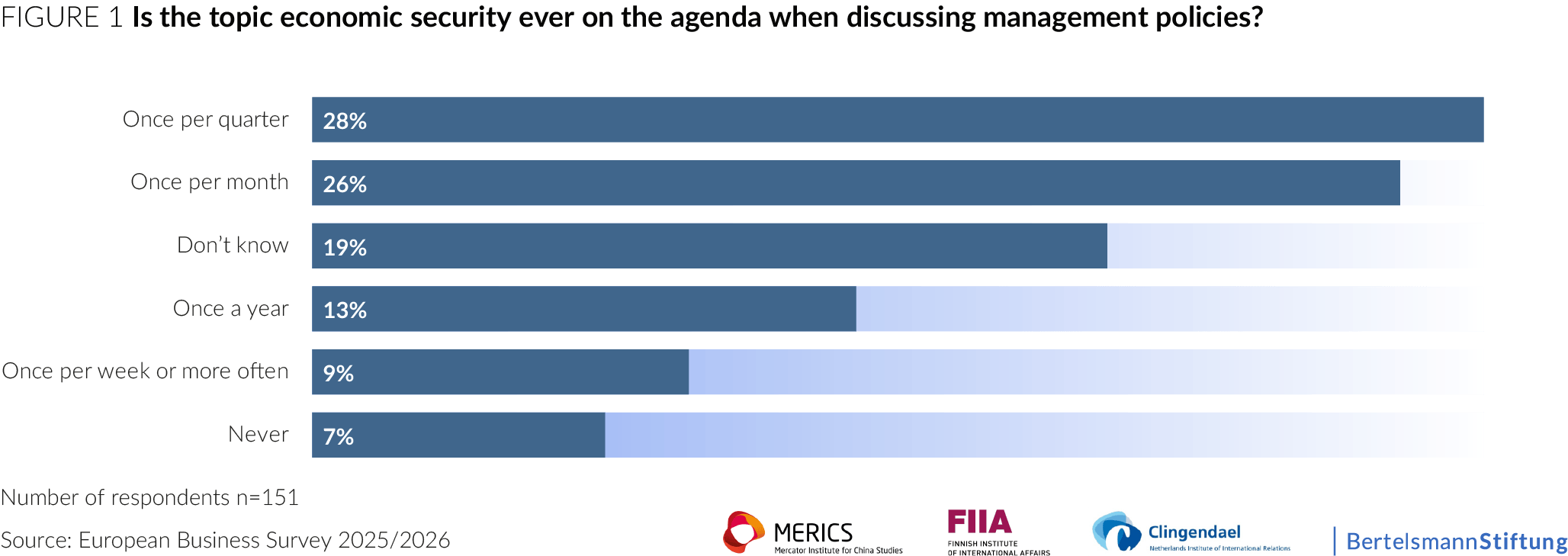
• Awareness of economic security leaves room for improvement. Only one third of the respondents discuss this issue at management level at least monthly, indicating that geopolitical risks are not yet fully integrated into corporate strategy.
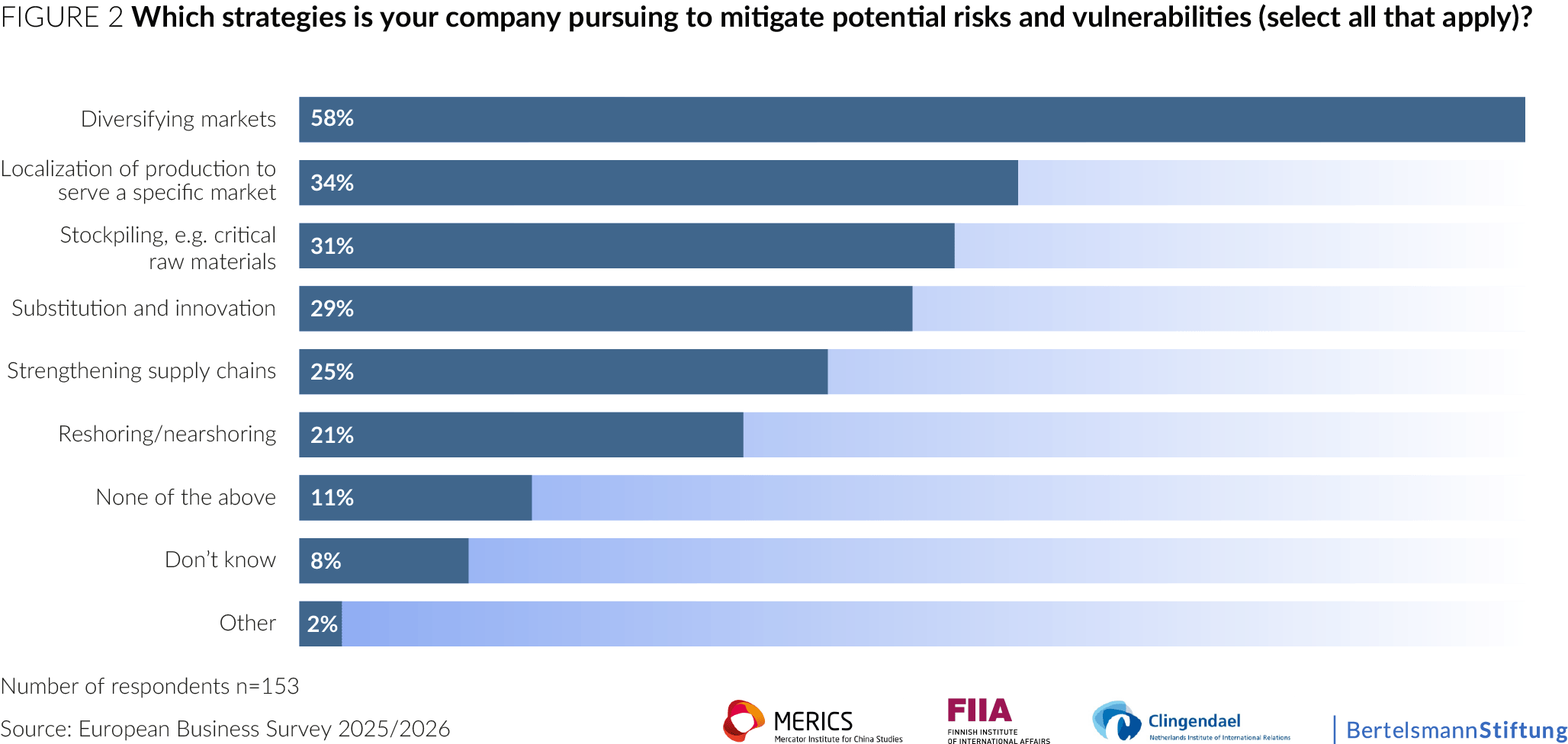
• The most common measures for mitigating geopolitical risks are diversifying markets (58%), localising production (34%), and stockpiling critical inputs (31%).
• At least one negative impact from the US-China rivalry was felt by 31% of respondents. Amidst these tensions, more than half of the respondents do not plan to reduce their involvement in either market, thus underlining their continued economic importance.
• US tariffs/import quotas are seen as the most burdensome economic security measure, with 66% having reported a negative impact. Comparable figures for Chinese and EU measures are significantly lower.
• Respondents are largely unprepared for a Taiwan contingency: Only 10% reported having taken concrete preparations, despite around 81% experiencing or expecting to experience tangible effects from Russia’s war against Ukraine.
• Respondents’ top priorities for EU action were strengthening the Single Market (61%), investments in technological innovation (59%), and the development of a more coherent industrial policy (53%). More assertive measures against China or the United States received only limited support (18% and 16%).
Despite geopolitical upheavals and concerns about economic security, results suggest respondent companies have been slow to integrate this issue into their corporate strategies. Furthermore, corporate preference for supportive rather than assertive measures reveals a gap between companies and EU policymakers on what is needed to ensure Europe’s economic security. Bridging this gap will be crucial in building trust and improving the exchange of information between governments and businesses.
Although the survey is not statistically representative, it points to three priorities for policymakers and companies alike.
Policy priorities
- Strengthening corporate resilience by providing clearer guidance, advisory support for SMEs, and regular geopolitical stress tests for strategically important firms.
- Deepening the Single Market and improving the business environment in Europe, while simultaneously preparing targeted protective measures against unfair competition and powerplay tactics on the part of the United States and China – even though this will likely garner disapproval from segments of the business community.
- Establishing trusted channels for the confidential exchange of data between governments and businesses to improve evidence-based policies on economic security.
Corporate priorities
- Integrating economic security into strategic planning by identifying vulnerabilities in key inputs, to then diversify where necessary, stockpile where critical, and, where possible, factor in supply chain disruptions, so that resilience becomes a core strength.
- Improving preparedness for geopolitical contingencies, including Taiwan-related disruptions and spillover effects from regional conflicts.
- Engaging more closely with policymakers to support better coordination and calibration of economic security measures.
Introduction
Economic security has been pushed to the centre of political debates in Brussels and in the capitals of EU Member States. With the 2023 European Economic Security Strategy (EESS) and subsequent initiatives in 2024 and 2025, the European Commission has established a clearer framework to address risks related to critical technologies, supply chains, strategic dependencies, as well as inbound and outbound investments. The primary objective is to strike a balance between openness and resilience through “protect, promote, partner”. This is achieved by promoting European competitiveness and the Single Market, by safeguarding security with better coordinated tools, such as export controls and investment screening, and by then separately deepening cooperation with reliable global partners. Yet Member States differ in their willingness to strengthen and coordinate these tools across policy areas. As a result, companies often face an incoherent and evolving regulatory landscape across the EU, while implementation and enforcement are largely left to them. They must adjust supply chains, partnerships, and market strategies in an increasingly fragmented and uncertain global economy.
Despite the increasing policy focus on economic security, systematic evidence on how companies operating in Europe navigate geopolitical and geoeconomic developments remains limited. While Japan, the Netherlands, and Finland have conducted national surveys of firms on economic security, there is no comparable assessment on a European level. Our pilot business survey aims to contribute to bridging this gap.
Survey background and limitations
Bertelsmann Stiftung, the Mercator Institute of China Studies (MERICS), the Finnish Institute of International Affairs (FIIA), and the Netherlands Institute of International Relations (Clingendael) together developed this survey as a pilot project. Europe’s largest business association, BusinessEurope, supported the survey by distributing it to its members, which are national and regional business associations. They could then share the survey with their own member companies.
Between 24 November 2025 and 5 January 2026, 228 companies across Europe submitted survey responses. Although some companies did not complete the survey, around 130–150 answered all or most questions.
The survey used the OECD definition of economic security, which “refers to a nation‘s ability to protect and sustain its economic stability and growth by strengthening its resilience against external and internal threats.”
Events such as the tensions between the United States and the EU over Greenland, or the war in Iran, occurred between the survey period and the publication; the responses therefore do not reflect them. The survey was based on voluntary participation and represents the views reported by the participating companies themselves, which may introduce bias, as firms that are more committed to economic security may have been more willing to complete the survey than companies that are not.
Moreover, it is possible that not all BusinessEurope members sent the survey to their member companies. This could explain the geographic bias among respondents and account for why, in some EU Member States, no companies participated in the survey. As a result, a few countries are disproportionally well represented, specifically Germany (36%), Italy (30%), and Sweden (13%).
The survey covered a good range of company sizes, with 53% being SMEs (1–250 employees), and larger firms making up the rest: 13% (251–1,000 employees), 15% (1,001–10,000 employees), and 19% (10,000+ employees). We provide a comparative analysis by company size throughout the report.
The range across industries was wide, with automotive (10%), machinery (13%), and fashion (17%) as the sectors most frequently selected by respondents. We use these three sectors for comparative analysis throughout the report.
We use a variety of specific examples to qualitatively illustrate the results of the survey. A majority of these are drawn from other research by the authors that corroborates the survey findings, while a minority of those examples were provided directly by respondents in certain questions which allowed them to add details. Examples with the following symbol were drawn from the authors’ other research work: †
As a pilot, the survey serves as a valuable starting point for follow-up surveys and in-depth analysis on corporate perspectives on economic security. While this sample is not designed to be statistically representative of companies operating in Europe, the findings offer cross-sectoral signals on how firms respond to economic security challenges, and highlight priority fields of action for political and corporate decision-makers.
Companies surveyed try to mitigate geopolitical currents, with sectoral and size-related differences
The survey results indicate that geopolitics and economic security have become topics for discussion among corporate decision-makers, but there is considerable room for improvement: Only one third of respondents report that economic security is on the agenda in management discussions at least once per month (Figure 1). Larger firms will have more resources and external consulting dedicated to economic security issues, some with entire teams tracking these developments and incorporating them into strategy and operations. SMEs may lack those resources. They may thus be less prepared for geopolitical shifts and developments in economic security.
Companies were most likely to adjust their strategies in response to geopolitical shifts in the categories cybersecurity (57%), information and data security (55%), supply chains (55%), and investment and M&As (40%). Generally, the larger the company, the more risk-mitigation measures it has adopted when compared to SMEs. Larger companies are also more likely to take measures in regard to supply chains (>82%), which generally may be easier for firms with a global presence and better access to diverse suppliers.
To implement their changing strategies, companies surveyed are taking a wide range of possible measures (Figure 2). The most common choices are to diversify markets; to localise production in a specific market; to stockpile critical inputs; and to substitute and innovate, with the aim to decrease dependencies. More than 43% of SMEs and 77% of companies with more than 10,000 employees are taking diversification measures. Larger companies (over 1,000 employees) show stronger tendencies towards stockpiling and localising when compared to SMEs. The larger companies also have more room to substitute and innovate their products (52%).
A sectoral breakdown reveals notable differences: Companies in the automotive and machinery sectors reported more strategic adjustments than companies in fashion/textiles, which reflects the greater complexity of the supply chains needed to make a car or a machine over clothing. Automotive firms were the most likely to localise their production closer to their respective markets (68%), especially in major markets like the United States and China. Given the scale of their operations, this is often a viable strategy: Setting up production close to end markets has long been standard practice in the automotive industry. It can now be framed as a risk-mitigation measure. Machinery firms, by contrast, are more inclined to pursue diversification (63%) and less likely to localise production (42%). This likely reflects their smaller scale of production. Many machinery companies – particularly smaller ones – may operate with a single global production site, which makes large-scale localisation less feasible. For example, a German Mittelstand SME in the Black Forest may only make a few dozen of a given machine or a few hundred of a given component per year, making it more difficult to produce locally in any other market from a business-case perspective (†).
The US-China trade and tech rivalry causes headaches among corporate leadership of (large) companies
The US-China trade and technology rivalry has negatively impacted 31% of respondents. The most negative impacts include tariffs and export controls by both the United States and China (Figure 3). Around two-thirds of large firms reported negative impacts, as did two-thirds of all firms who had operations in both the US and Chinese markets. This is likely due to the fact that these firms have to navigate much more cautiously between the two great powers. Of SMEs, 64% reported no impact, while only 19% of companies with more than 10,000 employees did so. This makes sense, as many SMEs in more niche sectors may not have many competitors globally at their level of technology, and therefore the impact of escalating tariffs may be negligible. Similarly, larger firms with a global presence are more likely to have operations in both markets, which means that there might be more cases of friction where a value chain might cross the US-China ‘border’ and thus be hit by tariffs or technology requirements.
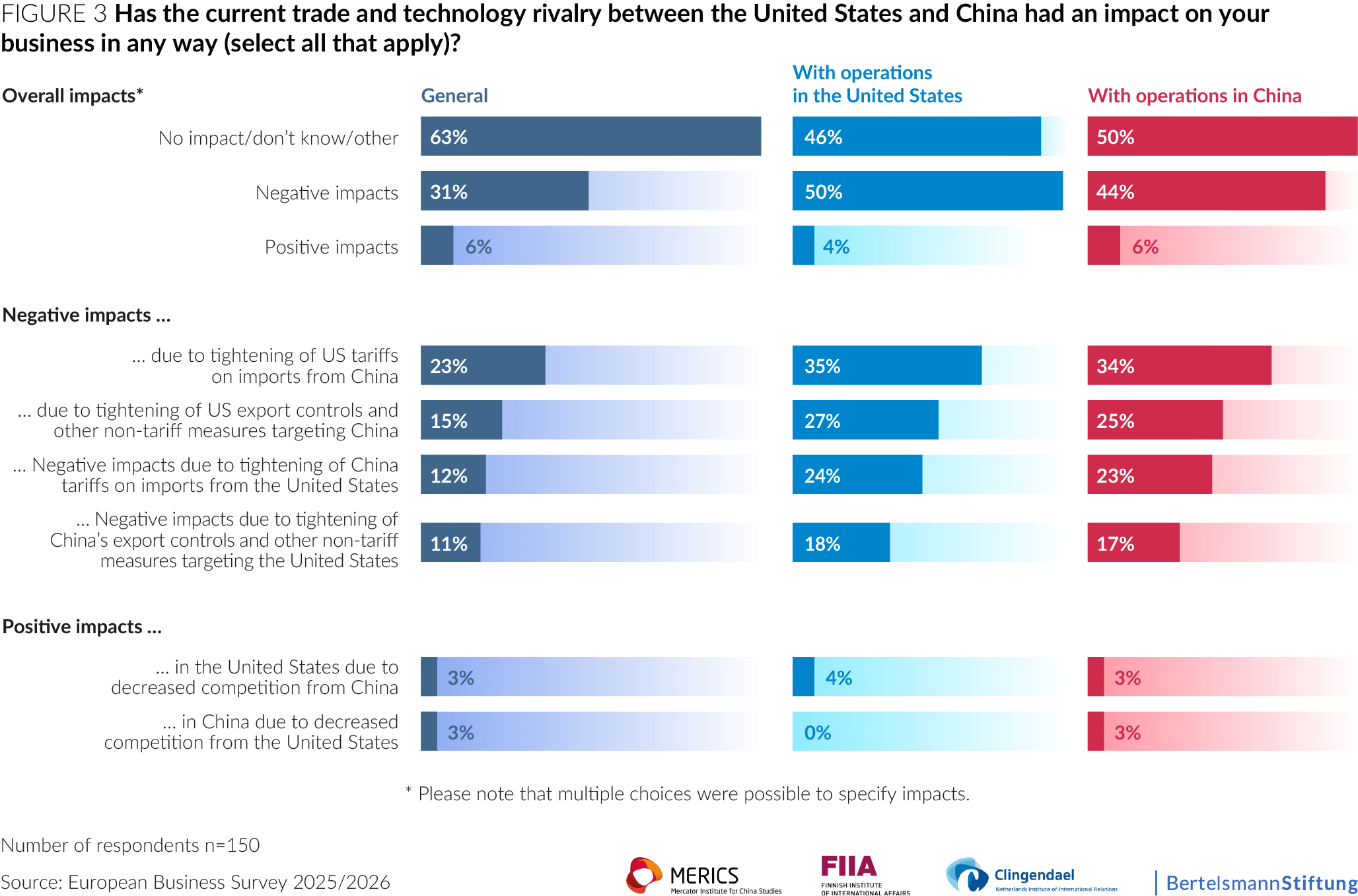
The automotive sector shows higher exposure to US tariffs (43% versus 23%) and export controls (25% versus 15%) than the overall sample, reflecting increased US car tariffs and tightening restrictions on chips and potential software. The automotive sector’s exposure to China’s export controls is also above average (25% versus 11%), likely due to rare earth restrictions.
The near absence of positive effects from the current trade and technology rivalry due to decreased competition from the United States/China likely reflects how disruptive the measures taken in this context are to global value chains. On the example of tariffs, the sale of a given good directly to the United States or China may benefit at that point from tariffs on the competition. However, in many cases, somewhere upstream of the product itself, there will have been one or many inputs, components, materials, etc. that ‘crossed’ the US-China trade ‘border’. As such, the net impact of bilateral tariffs between the two largest economies in the world tends to be a negative one.
The US-China rivalry does not seem to incentivise corporate diversification efforts
Despite geopolitical tensions between the United States and China, more than half of the respondents do not plan to diversify away from either the United States or China (Figure 4). Diversification away from the EU, which most likely means increasing investments in other markets rather than ‘leaving’ the EU, is even further down on the agenda: About 60% have no plan to do so. If respondents considered diversifying away from either of the three markets, their priorities are different: They are most likely to diversify away from China as a sourcing market and to diversify away from the EU and the United States as sales markets. Those with operations in the United States were slightly less likely to have diversification plans to move away from the United States, whereas those with operations in China were slightly more likely to have diversification plans away from China. For example, 74% of larger companies (> 1,000 employees) consider diversification away from China, with 30% aiming to diversify away from China as a sourcing market.
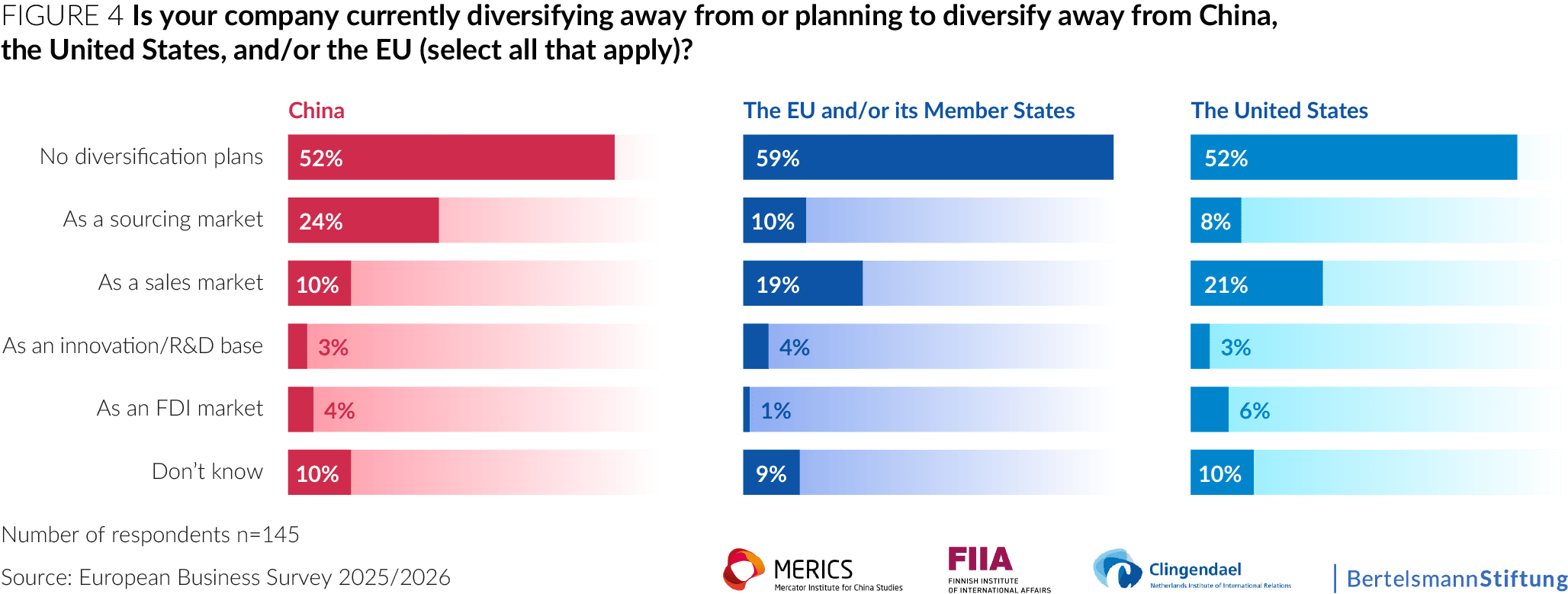
Relatively few respondents are diversifying away from the three markets regarding foreign direct investment (FDI) as well as research and development (R&D). This is unsurprising, as FDI and R&D operations are long-term fixed investments. For example, it tends to be more difficult for a company to move an existing factory elsewhere than to find alternative suppliers in other markets. Diversification in terms of FDI is therefore often less about moving production out of a market than about decreasing or halting new investments in that market. At the same time, geopolitical developments have intensified the trend towards localisation and nearshoring to make production and supply chains less vulnerable to disruptions. This may lead to even more FDI activities in the three markets instead of diversifying away from them. In regard to R&D operations, the EU, United States, and China are important innovation markets for many companies. For the companies that can afford the resources, it therefore makes sense to maintain an R&D presence in each market.
Companies surveyed regard US tariffs/import quotas as the most burdensome economic security measure
US measures
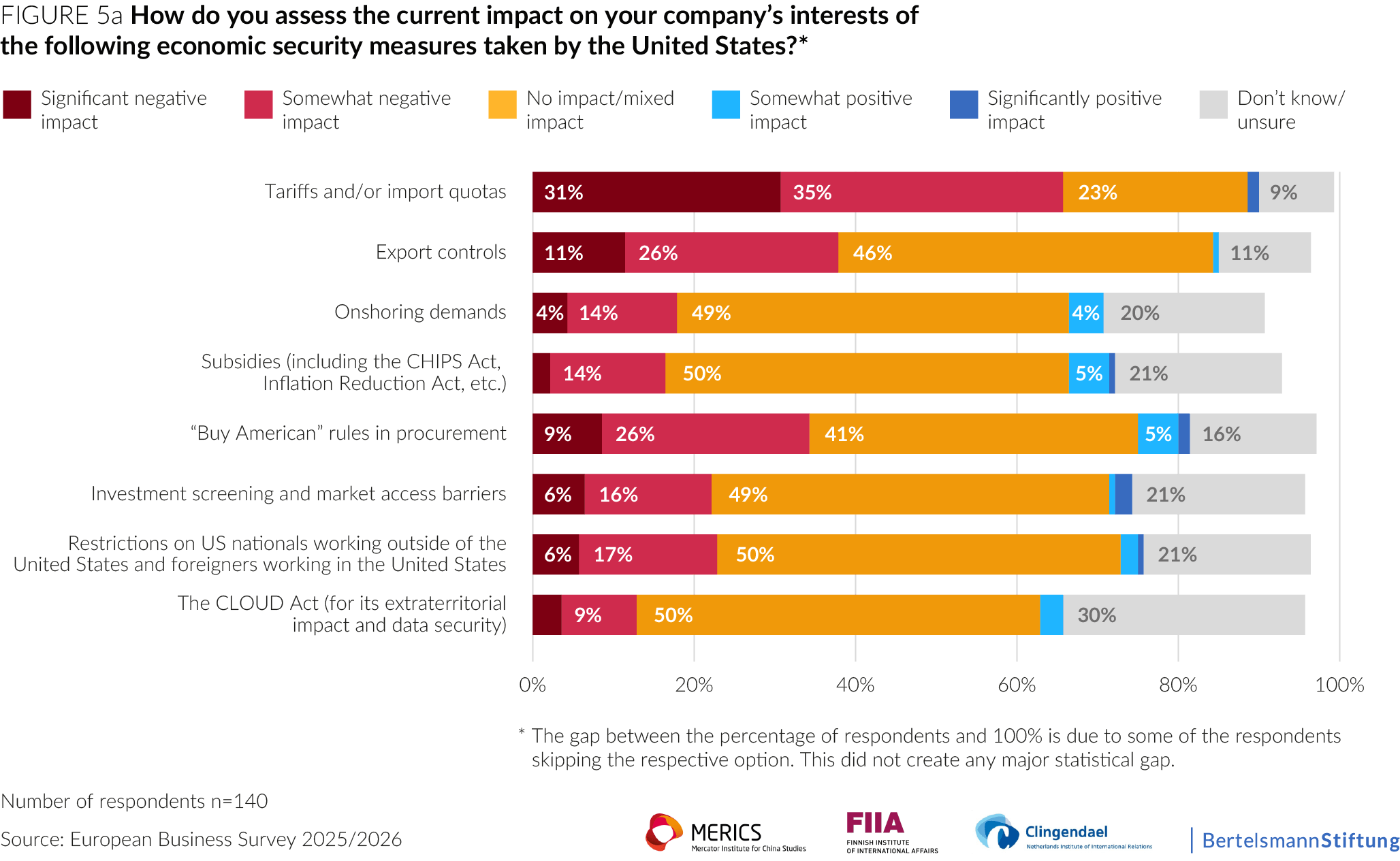
Respondents see US tariffs/import quotas as the most burdensome measure, with 66% of respondents reporting a significant or somewhat negative impact (Figure 5a). Export controls and US procurement rules (“Buy American”) follow with considerably lower percentages (37% and 35% respectively) as the most negative of US economic security measures. Those companies with operations in the United States were universally more negatively impacted by all economic security measures that the United States has imposed. US tariffs also had a substantial negative impact on those respondents without US operations, too, as many European companies export goods to the United States and the tariffs affect all trade in goods.
Companies with over one thousand employees had outsized negative impacts in response to certain US measures. Export controls and procurement rules negatively impacted half or more of those firms, with compliance growing ever more difficult for firms running global value chains as the number of goods under US export controls and procurement rules has grown along with the expanding US-China trade and technology conflict. Onshoring demands had an outsized negative impact on firms with more than 10,000 employees (37.5%). This might be explained by different corporate capacities: Large French or Dutch medical device makers can respond to onshoring demands and can bear the cost, small Italian luxury fashion makers or Spanish cheesemakers cannot (†).
Meanwhile, US tariffs/import quotas had a significant impact on the automotive sector (negative for 56%). Even though many European brands have localised production in the United States, they do so for larger cars and SUVs that suit the market, while exporting more mainstream models from Europe (†). Negative impacts of US procurement rules were also much higher for automakers (61%) than for machinery makers (35%). A possible explanation is that the United States has its own large automakers to supply procurement demands, whereas a lot of machinery types are not made in the United States. They may only be made in the EU or elsewhere. US procurers therefore have no domestic option to choose from.
Subsidies in the United States were less likely to have a positive or negative impact on the machinery and fashion/textile sectors, whereas in the automotive sector, 33% reported negative impacts and 20% stated positive impacts from US subsidies.
China’s measures
Respondents chose “no/mixed impact” for the majority of Chinese measures listed in the survey (Figure 5b). Respondents viewed China’s export controls and procurement rules as the measures with the most negative impact. However, with 33% and 31%, neither compares to US tariffs/import quotas (66%). Those companies with operations in China were universally more negatively impacted by all economic security measures that China has imposed.
SMEs seem to have been impacted less by Chinese economic security measures. Only 20% of them report a negative impact from tariffs; other impacts are negligible – yet again, likely a reflection of SMEs having less of a footprint in China; those that do are more likely to be situated in niche areas or are themselves just following their Original Equipment Manufacturers (OEMs) into China as suppliers. One exception is that 59% of SMEs stated negative impacts from China’s export controls, which likely reflects a wide range of European SMEs being left reeling by rare earth export controls. That rate was much higher than the general response and may indicate that larger firms are more likely to have established resources and personnel in their China operations who could quickly start working with Chinese officials and suppliers to obtain the required export licenses for rare earth elements – which is much easier for a major auto component maker with a large footprint in China than for a Czech auto component maker with a smaller China footprint (†). Respondents with more than 10,000 employees were most negatively affected by China’s procurement practices, market access barriers, and export controls – after all, a large German machinery and component maker has a much higher number of products which could be impacted than a small Danish pharma company with only a few niche products (†).
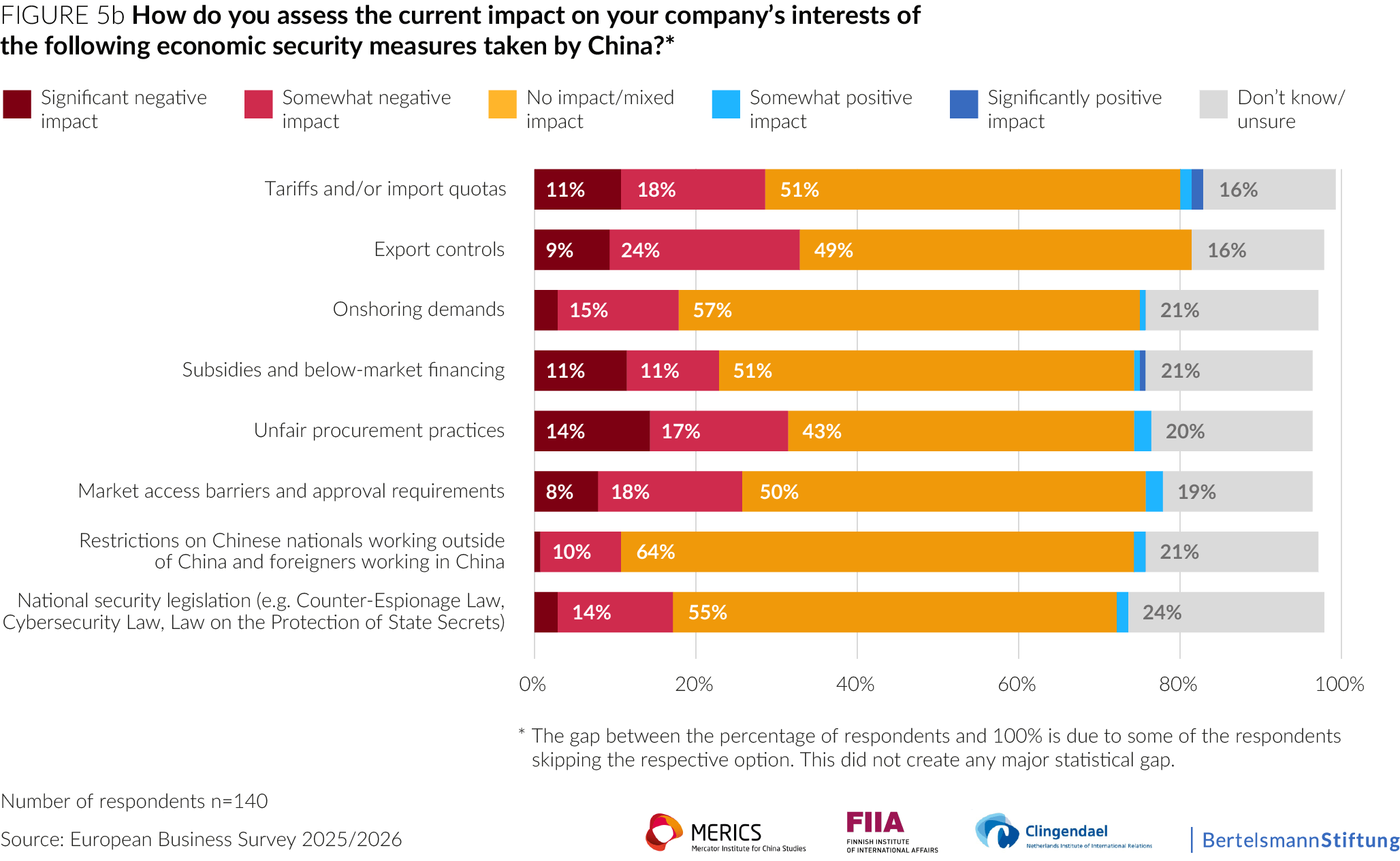
China’s tariffs had an outsized impact on the machinery sector (44% negative) and an average impact on the automotive sector (33% negative), which reflects the extent of automotive localisation whereas machinery firms (especially smaller, more specialised ones) are more likely to produce for global export from only one location. Onshoring demands negatively impacted 47% of automotive firms, whereas only a few machinery or fashion/textile firms were affected – again, large shares of machinery are produced in the EU for export, and the majority of luxury fashion produced in the EU is exported – at the very least, the branding is done in Europe (†).
China’s subsidies and below-market financing had an outsized effect on the automotive industry. For automotive respondents, 47% reported significant or somewhat negative impacts – likely a result of the extent of China’s subsidies that produced its EV champions and keep loss-making manufacturers (“zombie firms”) alive. As for unfair procurement, the number even stands at 60% – anyone who has taken a taxi in the different regions of China since the EV boom is unlikely to have seen many European brands, as local governments and local taxi SOEs have now for years used fleet procurement as a way to support their local EV champions (†). The machinery sector was also impacted more negatively by unfair procurement than average, with 46% noting a significantly or somewhat negative impact.
European measures
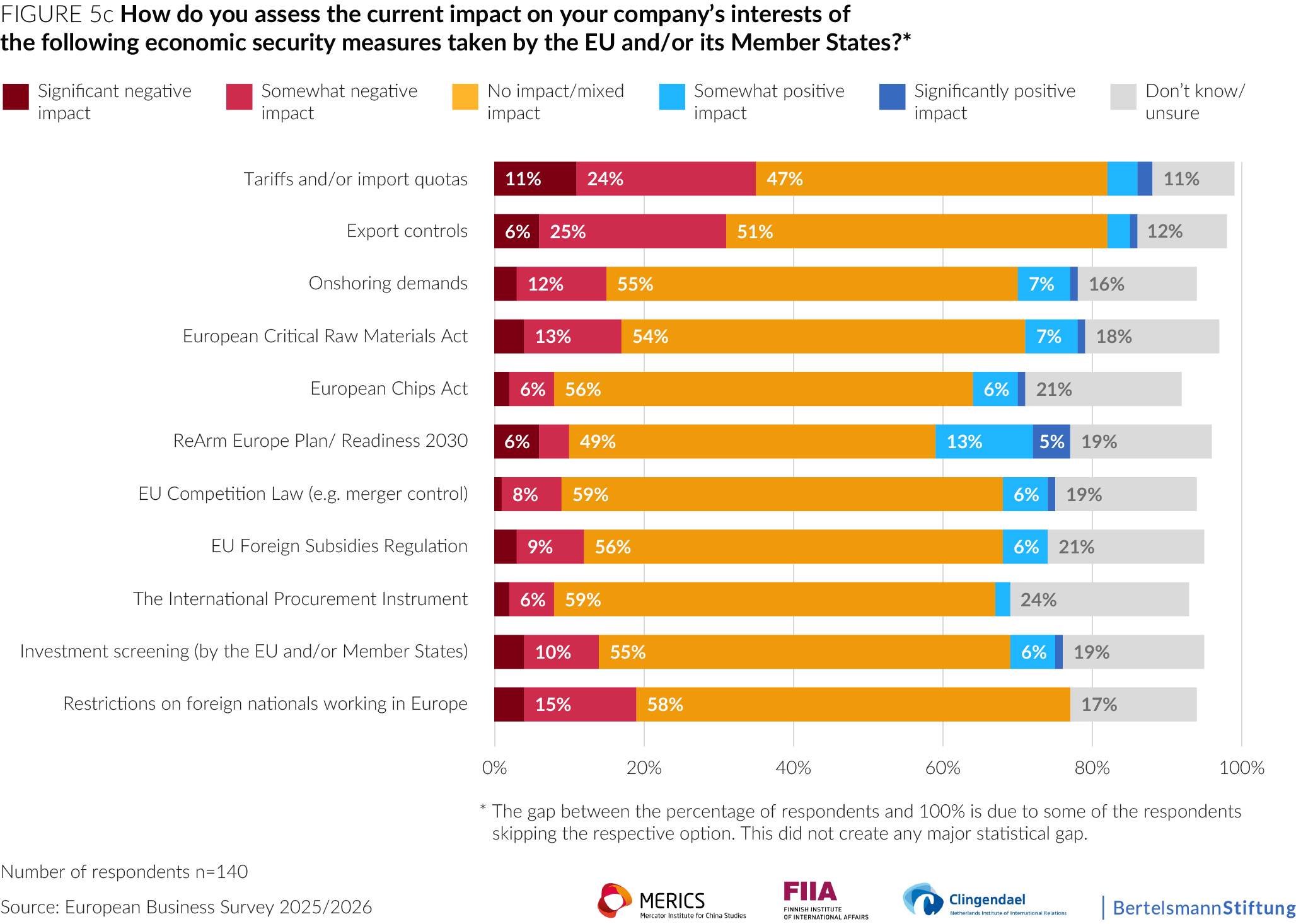
Respondents viewed the majority of EU and/or Member State measures mentioned in the survey as having “no/mixed impact” (Figure 5c). The impact of tariffs and/or import quotas, and that of export controls was reported as significant or somewhat negative by 36% and 32% of the respondents, respectively. None of the EU measures even come close to the 66% of respondents reporting negative impacts due to US tariffs.
A significant share of companies saw positive impacts from the ReArm Europe Plan (19%), and some positive impacts from other measures such as the Chips Act and Critical Raw Materials Act, though neither of those measures had more than 10% of the respondents noting positive impacts.
The Chips Act had a disproportionately high number of positive responses in the automotive sector. ReArm Europe was viewed positively by the automotive and machinery sectors, likely reflecting that an increased defence production will especially bolster automotive component makers and machinery makers which produce the equipment and components that are used in defence manufacturing.
SMEs were generally less impacted by European measures, though several companies flagged tariffs (28%) and export controls (22%) as well as restrictions on foreign nationals (22%) as negative. Companies with 10,000 or more employees are more concerned about investment screening (23%), EU Competition Law (23%), and onshoring demands (27%).
Tariffs were most likely to negatively impact the automotive sector, likely reflecting the EU’s countervailing duties on electric vehicles produced in China. As these measures apply regardless of ownership, they also affect European manufacturers exporting China-made vehicles to the EU. Moreover, they bear the risk of Chinese retaliation on foreign companies in China.
Despite the lessons learned during Russia’s war against Ukraine, firms remain underprepared for Taiwan contingencies
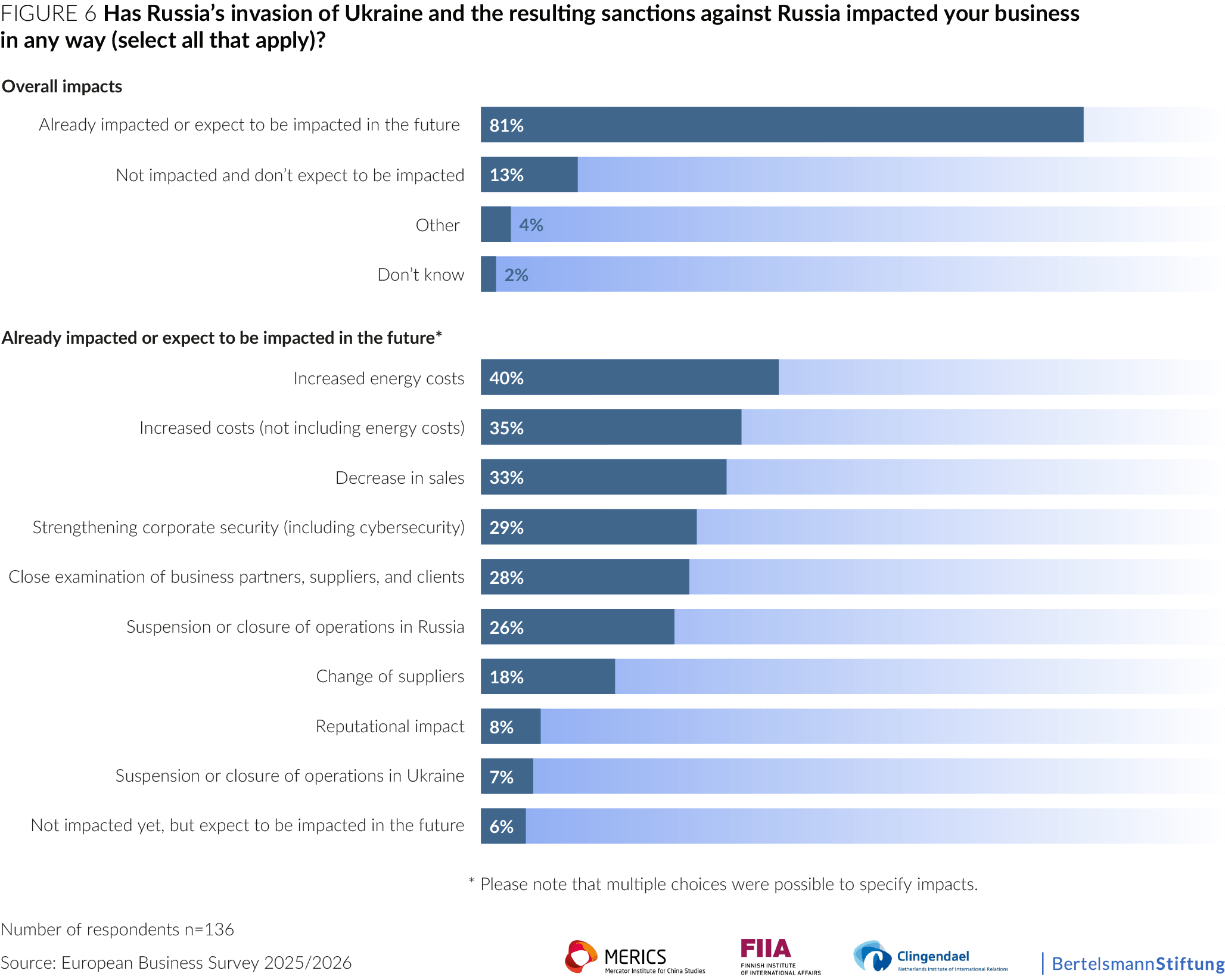
Russia’s full-scale invasion of Ukraine had widespread negative impacts for companies operating in Europe: 81% of respondents reported to experience or expect to experience tangible impacts, while only 13% indicated that they remained unaffected (Figure 6). The most negatively impacted respondents reported increased energy costs; increased costs (excluding energy costs); a decrease in sales; strengthening corporate security (including cybersecurity); and close examination of business partners, suppliers, and clients – which one respondent noted, in a written comment, had been good for business, as they offer due diligence services.
Larger companies were impacted more, as they tended to have greater trade and investment exposure to Russia prior to the war. The automotive and machinery sectors were more likely to engage in close examination of business partners, suppliers, and clients (38% and 47% respectively). The same is true for automotive and machinery companies regarding decreased sales (56% and 58% respectively). The automotive sector was also much more likely to be impacted by higher energy costs, with 62% reporting negative impacts – likely reflecting the relatively low margins of mainstream automakers, which expose them to rising energy prices, as well as increased costs for energy-intensive inputs such as steel, aluminium, and chemicals, where their suppliers will pass down their own rising costs.
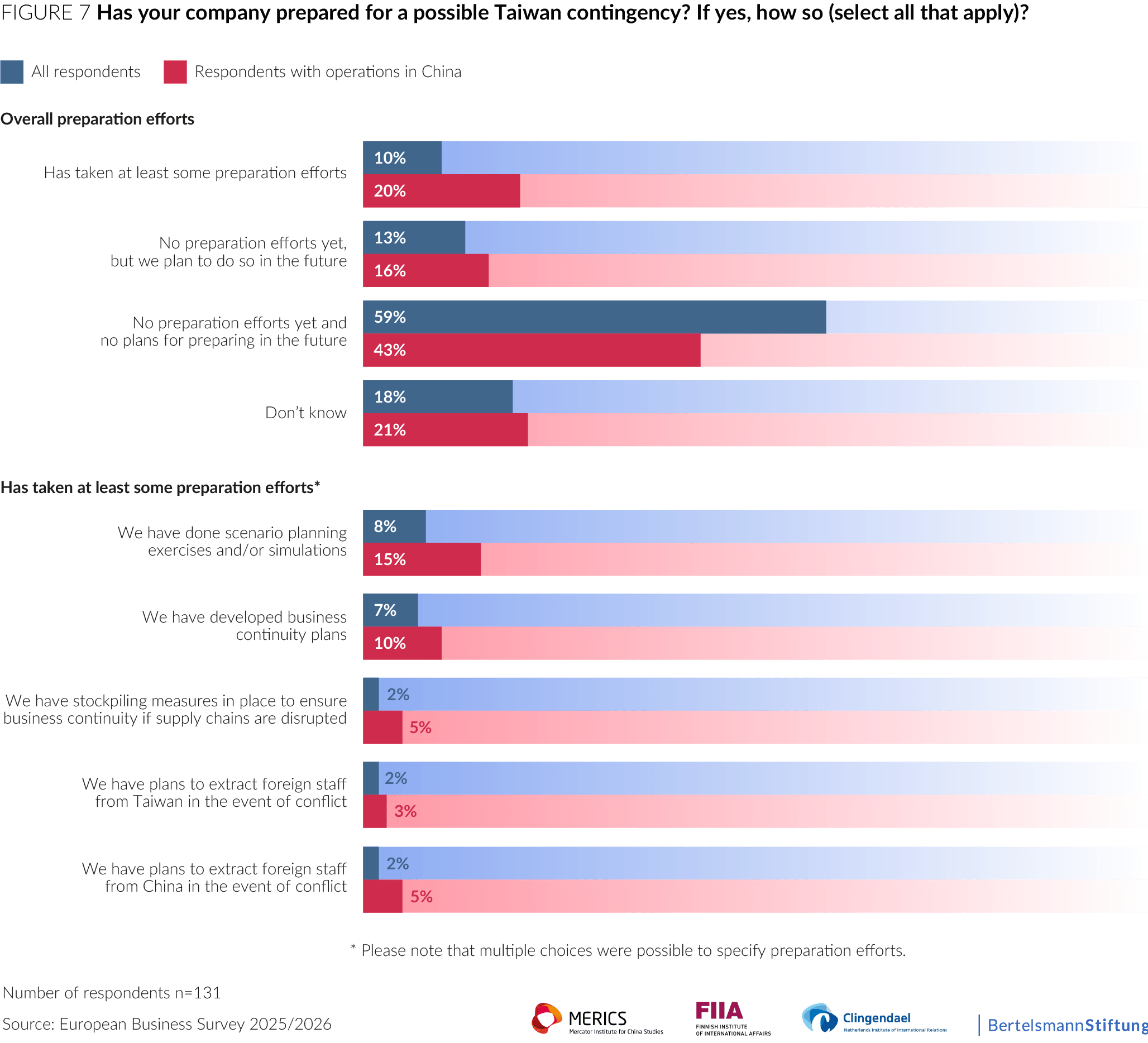
The experience with Russia – and earlier, the ”Ever Given“ accident in the Suez Canal and more recently the closure of the Strait of Hormuz – suggests that geopolitical shocks can arise rapidly and with far-reaching economic consequences. It therefore stands to reason that firms would draw lessons from this episode and prepare for other high-impact contingencies. Yet the survey results indicate that this is not the case when it comes to preparing for a potential conflict over Taiwan: Only 10% of the respondents have taken at least a few steps to prepare for a Taiwan contingency, mainly scenario planning/simulations and developing business continuity plans. 13% have plans to do so in the future, while 59% have not done anything and also do not plan to do so, and 18% remain unsure (Figure 7).
The larger the company, the more prepared it is for a Taiwan scenario: companies with more than 10,000 employees are far more likely to have explored scenario planning exercises than smaller firms. The automotive sector is less likely than the overall sample to report having neither preparations nor plans. Nevertheless, the fact that 46% of automotive companies have taken no action at all is noteworthy, as this sector is highly susceptible to disruptions in the Taiwan Strait. That is in part due to some upstream suppliers for various chips coming from Taiwan but more likely reflects their exposure to China-based value chains. Carmakers have extremely complex supply chains and most of them will run through China at least once if not many times; a crisis in the Strait would be highly disruptive to those value chains and unlikely to be constrained to those that run through Taiwan. Machinery companies were just as likely as most respondents to report having done neither preparation nor planning, however 23% of them stated they at least plan to do so in the future, which is higher than the average.
Beyond sectoral specifics, it is noteworthy that even among respondents with operations in China, only 20% indicate that they have taken at least some preparation effort for a possible Taiwan contingency, compared to 10% across the full range. While that share is clearly higher, the overall level remains relatively low, which might suggest that many companies are still willing to accept potential financial and business continuity risks rather than prepare extensively for such contingencies in advance.
Companies surveyed prefer ‘promote’ at home and abroad over assertive actions against the United States and China
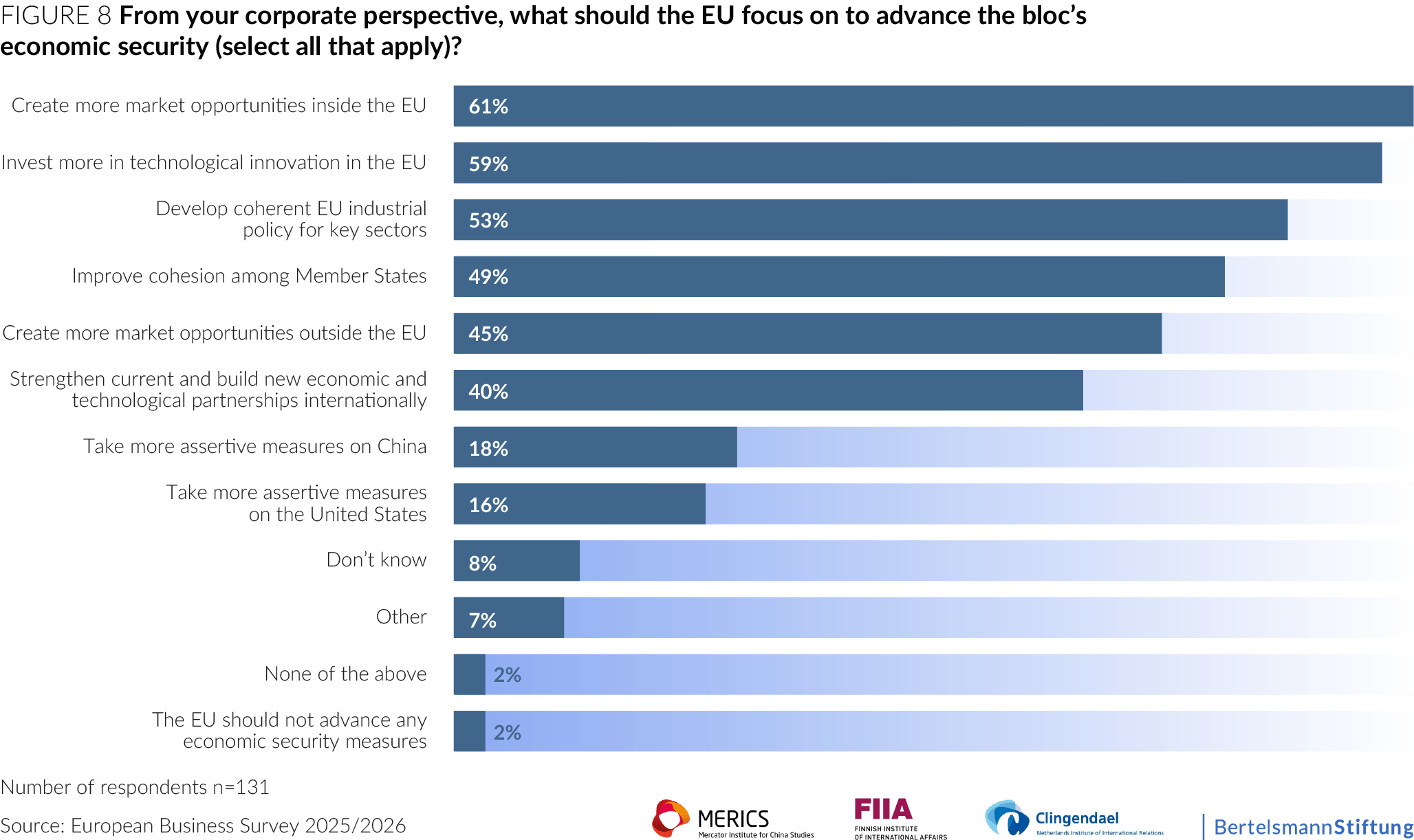
Regarding policy priorities, it comes as no surprise that companies favour the “promote” aspect of the EU’s economic security strategy, i.e. promoting European competitiveness and the Single Market. Respondents clearly support the establishment of more market opportunities inside the EU (61%), more investment in technological innovation (59%), the development of a more coherent industrial policy in key sectors (53%), and the improvement of cohesion among Member States (49%). The popularity of more confrontational steps against China (18%) or the United States (16%) remains limited (Figure 8).
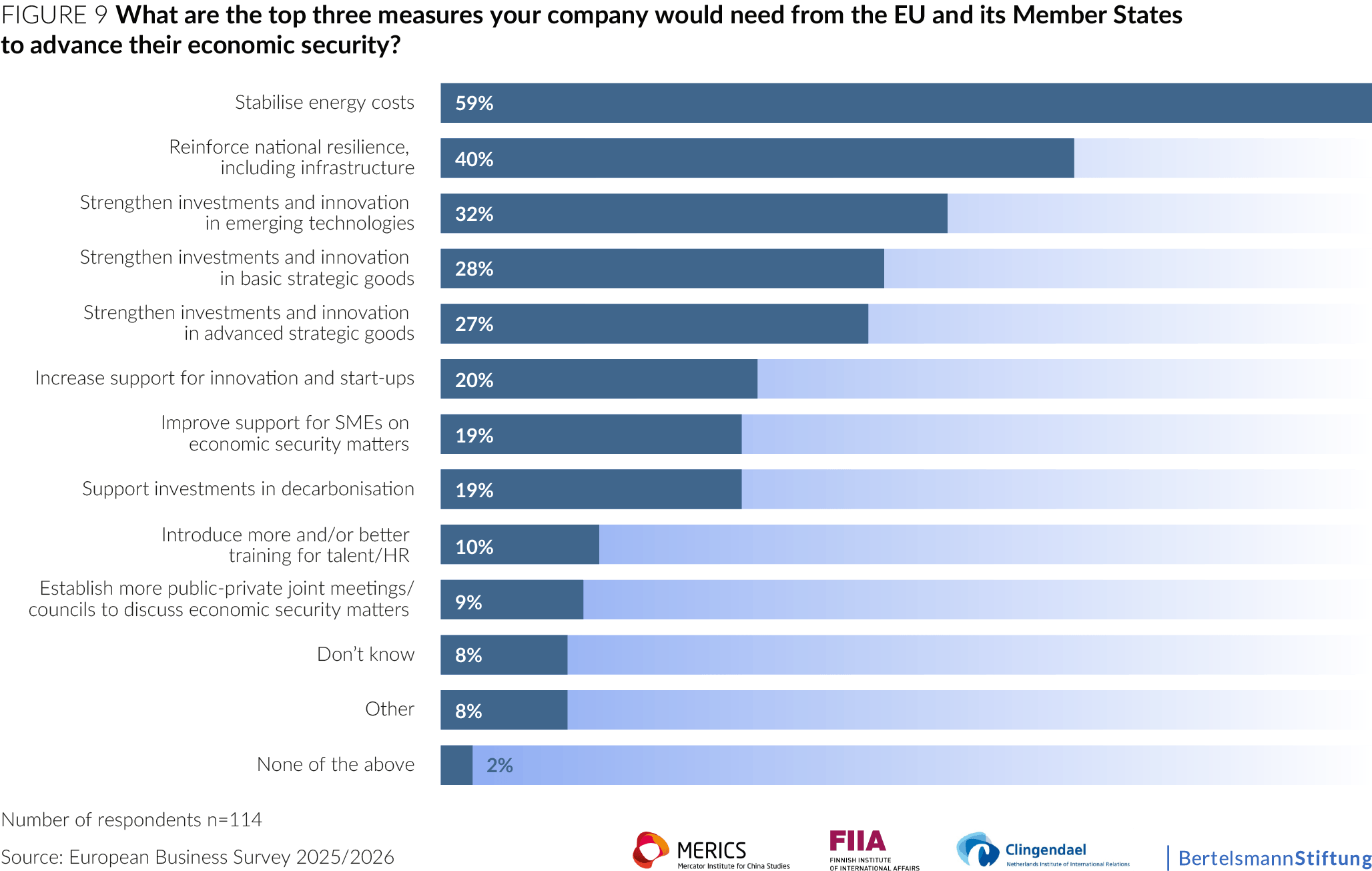
When asked which concrete measures the EU and its Member States should prioritise, the most common responses were stabilising energy prices, reinforcing national resilience and infrastructure, and strengthening investment and innovation in emerging technologies (Figure 9). Energy costs were a higher priority for the automotive (68%) and machinery (82%) sectors, which could reflect the energy-intensive nature of their respective industries – and thus the scale of impact that higher energy prices have had on their competitiveness. The automotive industry was also more likely to call for greater investment in decarbonisation (31%), which aligns with their efforts at transitioning towards electrification.
Conclusion: Economic security is here to stay – preparedness needs to catch up
The survey shows that awareness of economic security among companies – at least those that participated in the survey – is rising, however slowly. Economic security is no longer relegated to abstract policy debates but is becoming a management-level issue. Firms are already adapting – particularly in cybersecurity, supply chains, and diversification strategies – and more strategic sectors have moved further and faster. Exposure to geopolitical tensions remains high, especially for companies operating in the United States and China.
However, even with firms starting to take these issues seriously, considerable gaps remain, and companies across the board need to advance their economic security strategies more quickly and decisively. The inconsistent level of preparedness demonstrates this quite well: While Russia’s full-scale invasion of Ukraine had tangible economic consequences, most of the companies surveyed remain underprepared for a potential Taiwan contingency – despite the far greater systemic implications such a conflict would entail. Smaller firms in particular often lack the resources to anticipate and manage geopolitical risks.
Companies generally agree that the EU should act in a more contested global setting, but favour measures in the “promote” aspect of economic security which aim to strengthen the EU at home – actions such as stabilising energy prices, investing in infrastructure and resilience, and supporting innovation. The reality, however, is that internal measures alone will not suffice for the EU to be responsive, let alone proactive, in a changing world. Furthermore, internal measures by themselves will not only fail to meet the challenge of dealing with issues from the United States and China, but will also prove insufficient to compete successfully with US and Chinese firms in the rest of the world.
The survey results are another indicator that economic security should become a structural feature of the EU’s economic model. Strengthening analytical capacities, deepening public-private coordination, and accelerating preparedness efforts will be essential to ensure that the EU remains competitive, resilient, and strategically capable in an increasingly fragmented global economy.
Fields of action for policymakers: Support corporate resilience and focus on EU core interests
1. Supporting corporate resilience to geopolitical friction
A central finding of the survey is that only a minority of the companies surveyed include economic security in their strategic considerations and improve their resilience against geopolitical shocks, such as a Taiwan contingency. Policymakers should therefore support and incentivise businesses to diversify supply chains, reduce excessive dependencies, and improve risk monitoring. Targeted public investment and financial support can help, for example, to develop critical raw materials value chains – including rare earths and refining capacities – both within Europe and in trusted partner countries, thereby reducing strategic vulnerabilities by means of diversification. This includes creating incentives for EU businesses to closely adhere to best practices in recycling and circular economy needs, as well as building up industrial capacity in related but critical parts of the supply chain.
A more contentious consideration would be to either have state-controlled stockpiles of certain critical inputs or to require companies in strategically critical sectors to maintain a minimum stockpile of essential goods. Governments already do this for critical energy reserves, and countries like Finland, which has a government-funded National Emergency Supply Agency, have significant stockpiles of strategic goods, in addition to rules for pharmaceutical producers and importers to manage their own stockpiles of medicines.
Finally, resilience requires greater foresight. Governments could encourage and support companies to strengthen scenario planning for geopolitical contingencies and practise crisis simulation exercises with public-sector, private-sector, and civil-society partners to improve the preparedness for geoeconomic shocks. Governments could also consider rules that would compel strategically critical firms to perform geopolitical stress tests on a regular basis.
2. Making Europe fit to compete – and ready to protect its interests
European companies rightly call for a more competitive home base, primarily by unlocking the full potential of the Single Market. Reducing regulatory fragmentation, lowering administrative burdens, and allowing firms to scale across borders remain the EU’s most immediate levers at home to strengthen its economic foundation.
More attention is already being paid to this, and steps are being taken. The European Council’s March 2026 “One Europe, One Market” agenda specifically called for removing barriers to cross-border scaling, simplifying regulation, accelerating infrastructure permitting, and strengthening integration of energy and critical infrastructure networks across the Union. The conclusions also emphasised reducing strategic dependencies, advancing technological sovereignty, and accelerating investment in digital infrastructure, energy grids, and strategic sectors through initiatives such as the Industrial Accelerator Act and Energy Union 2030. However, improving framework conditions alone will not be enough in an increasingly geopolitical economic environment. Systemic competition with China and growing economic assertiveness from the United States require the EU to complement internal reforms with more decisive external action. This includes addressing structural misalignments such as state-backed industrial advantages, unequal energy costs, and currency effects, while responding to power-based economic measures.
In some cases, this will create tensions with short-term business interests. For example, companies may be reluctant to diversify supply chains or shoulder higher costs where this puts early adopters at a disadvantage. Targeted policy interventions – by means of incentives, regulation or market-shaping tools – are needed to align private incentives with Europe’s broader economic security objectives.
Ultimately, strengthening Europe’s economic base and protecting it against external pressures must go hand in hand. This requires not only a more integrated Single Market and a more coherent industrial policy, but also the political willingness to take assertive measures where necessary – even if not always immediately welcomed by businesses.
3. Building economic security on better intelligence
Targeted and sustainable economic security policies require more than political intent – they depend on a granular understanding of corporate vulnerabilities, dependencies, and adjustment costs. Yet policymakers often lack access to timely, corporate-level insights which are needed to assess risks accurately and design effective interventions.
To bridge this gap, governments should establish structured, confidential, and trustworthy channels for the exchange of information with businesses and industry associations. This includes secure mechanisms to collect data on supply chain dependencies, critical inputs, and exposure to geopolitical risks, while ensuring strict security measures for commercially sensitive information.
Such exchanges should go beyond ad hoc consultations and beyond obvious sectors (such as semiconductors, for which more institutionalised networks exist) and evolve into institutionalised processes that permit continuous monitoring and early warning. Better data would allow policymakers to identify systemic risks, anticipate unintended consequences of regulation, and design more targeted, proportionate measures.
Ultimately, strengthening the evidence base for economic security would not only improve policy effectiveness, but also help align public action with business realities – increasing both credibility and compliance.
Fields of action for companies: Preparedness and resilience as drivers of competitiveness
1. Turning resilience into a core business competence
Companies need to systematically address economic security and translate awareness into operational action. This starts with a more comprehensive examination of value chains to identify critical dependencies beyond tier-one suppliers, with the depth of analysis corresponding to firm size and exposure.
Building on this, firms should actively identify the channels through which geopolitics does or may affect their operations and address vulnerabilities by diversifying suppliers, markets, and investment locations where feasible. Where dependencies remain unavoidable, particularly for critical inputs, strategic stockpiling can provide an important buffer. At the same time, companies should consider geopolitical risks more explicitly in pricing and investment decisions – treating resilience not as a cost factor, but as a core ingredient for long-term competitiveness, much like insurance.
To ensure effective implementation, companies should embed geopolitical risk management into organisational structures, for example with cross-functional teams or dedicated task forces that connect strategic, operational and regional perspectives.
2. Preparing for geopolitical flashpoints and systemic disruptions
Companies need to prepare for geopolitical contingencies – including but not limited to Taiwan – regardless of their direct presence in affected regions. The increasing use of “grey-zone” tactics and the interconnected nature of global supply chains result in disruptions quickly propagating across regions and sectors.
Preparedness should therefore go beyond binary conflict scenarios and include planning for partial disruptions, such as trade restrictions, regulatory shifts, or temporary blockages of key transport routes. Firms should strengthen their monitoring capabilities to track geopolitical developments and assess second- and third-order effects on operations, supply chains, and markets.
The development of robust contingency plans requires integrating geopolitical intelligence into company-wide risk management and ensuring close coordination across business units, regions, and external partners. This allows for faster, more informed responses in case of disruptions.
3. Strengthening public-private coordination on economic security
Corresponding to the third field of action for policymakers, companies should play a more active role in shaping and informing economic security policies, on the sides of both promote and protect. This requires closer engagement with policymakers to establish secure and trusted channels for the exchange of information.
By providing insights into value chain dependencies, critical vulnerabilities, and potential adjustment costs, companies can help improve the calibration and effectiveness of policy measures – especially given the fact that systemic competitors such as China already have access to some of this information due to requirements implied by export controls on rare earths. At the same time, firms benefit from access to public-sector intelligence, early warnings, and a better understanding of the regulatory environment.
As pointed out above, such cooperation should move beyond ad hoc exchanges towards more structured and continuous interaction, including engagement with industry associations, research institutions, and other stakeholders. A more institutionalised approach to public-private coordination can enhance both corporate resilience and the overall effectiveness of economic security policies.
References and footnotes can be found in the PDF version of this policy brief.
About the author
Cora Jungbluth is Senior Expert in the Europe’s Future Programme at the Bertelsmann Stiftung. Her research focus is on China, foreign direct investment and international trade, especially the role of emerging economies.
Jacob Gunter is Head of Program of „Economy and Industry“ at MERICS.
Maaike Heijmans is a senior research fellow at the Clingendael Institute, where she leads the ‘Geopolitics of Technology and Digitalisation’ programme.
Cordelia Buchanan Ponczek is a Research Fellow at the Finnish Institute of International Affairs, and a Clarendon Scholar and doctoral candidate at the University of Oxford, where she is researching the political economy of multi-stakeholder extraction projects.


Kommentar schreiben